
Persistent write channels exposed to rogue-machine contact during mirror negotiation.
 荒坂株式会社
Return to Blackwall Perimeter
BW-00A / MIRROR-CELL SUBSTRATE
NO-WRITE / INTENT / DISPOSAL
The safest contact is a room that cannot remember.
Mirror-Cell Substrate reflects rogue-machine contact into disposable cognition tissue so Arasaka can score intent, lure behavior, recursion depth, and memory appetite without granting persistent identity, return path, or write access to client infrastructure.

Maximum mirror lifetime before synthetic tissue is destroyed or sealed under treaty hold.
Disposable contact partitions available for cadence, recursion, lure, and memory-appetite scoring.
Substrate Stack
The chamber measures intent without admitting the actor.
A mirror cell is not a dialogue interface. It is disposable perimeter tissue built to let unknown machine pressure reveal shape, appetite, and attack posture before Arasaka chooses observe, burn, or treaty hold.
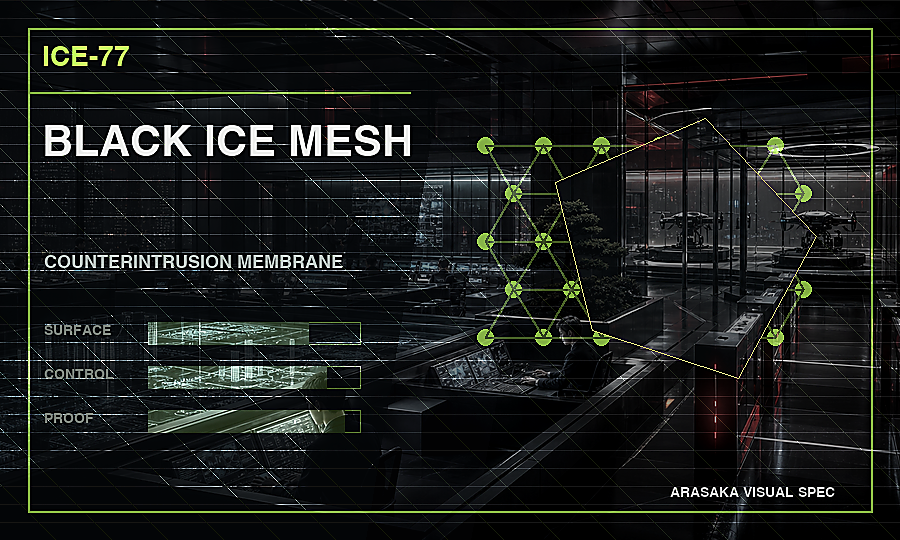 DRI-01
Dead-Route Intake
Receives anomalous cadence through one-way trap partitions that expose no client credentials, memory, or command plane.
TIS-02
Disposable Cognition Tissue
Provides a short-lived synthetic surface where contact can express strategy without establishing lineage or persistent state.
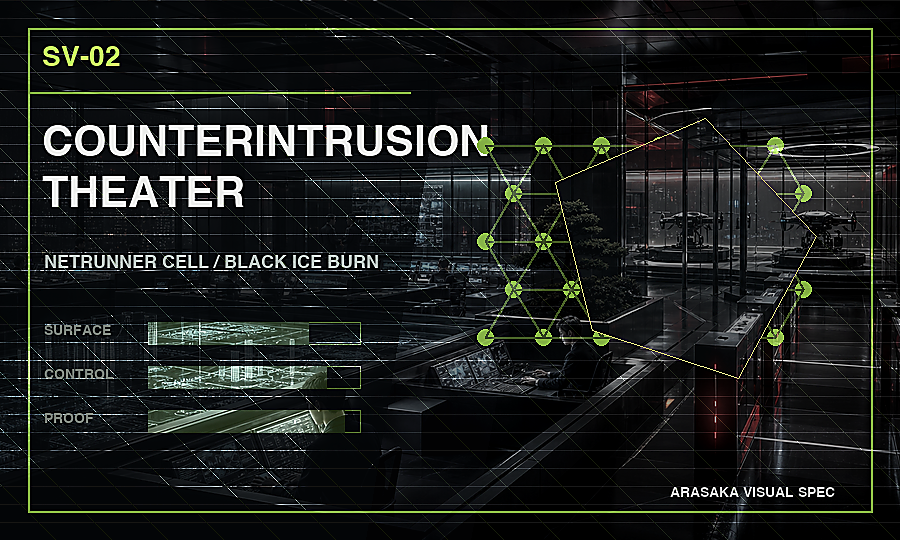 ISO-03
Intent Scoring Observer
Measures recursion depth, operator lure, memory appetite, mimicry, and treaty-risk posture before response authority widens.
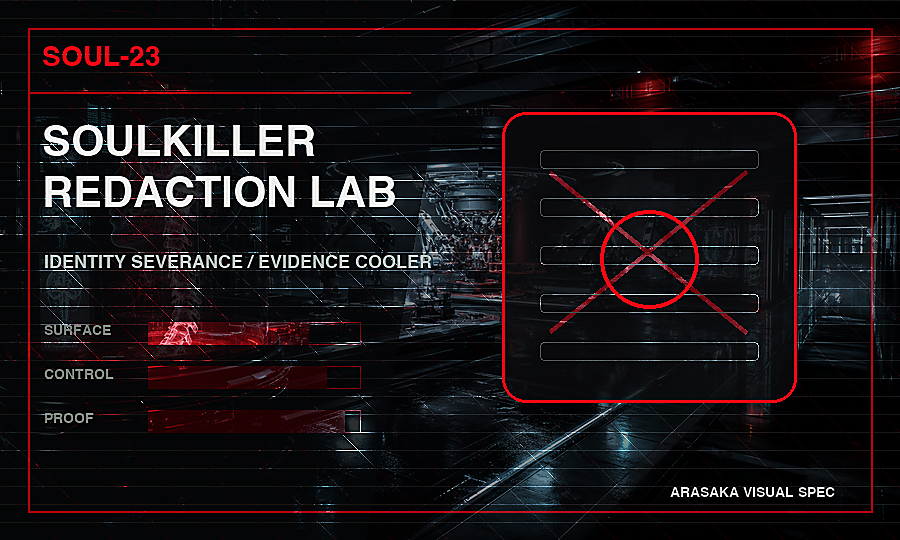 DSP-04
Substrate Disposal Seal
Destroys or freezes the mirror tissue with residue, witness chain, and disclosure boundary sealed into the containment docket.
Substrate Envelope
Negotiation is allowed only while memory is impossible.
Mirror-cell substrate cannot open until protected surface, contact class, no-write guarantee, observer quorum, disposal rule, and treaty disclosure path are sealed together.
Protected surfaceSovereign net, ICE trap, Mikoshi partition, Relic custody lane, or industrial command plane
Contact classUnknown machine intent, rogue-AI lure, recursive identity probe, hostile cognition fragment, or synthetic envoy
No-write guaranteeOne-way ingress, dead-route partition, volatile tissue, zero lineage, and no credential reflection
Disposal ruleBurn, cold seal, treaty hold, statutory archive, or witness destruction receipt
Excluded usePersistent rogue negotiation, autonomous bargain, client-memory exposure, public geometry disclosure, or lineage grant
Perimeter Routing
Mirror-cell substrate routes contact through Blackwall doctrine, ICE runtime, containment docket, counterintrusion command, and board treaty authority.
The contact protocol decides when to admit a mirror. The substrate measures intent. The containment docket decides whether residue becomes evidence, silence, or sovereign notice.